Quantum IPO Landscape in 2025
Several quantum science companies have gone public so far in 2025, marking a pivotal year for the commercialization of quantum technology. Francisco Castro, our WAIQer turn into a Quantum Investor, predicted this summer in our course in Boston that there would be more quantum companies listed on the stock exchanges. Standouts like Infleqtion and Xanadu have captured attention with high-profile SPAC deals, joining other established names in shaping the future landscape of quantum research and applications. This post reviews their market entries, business focus, and what might unfold in the months ahead.
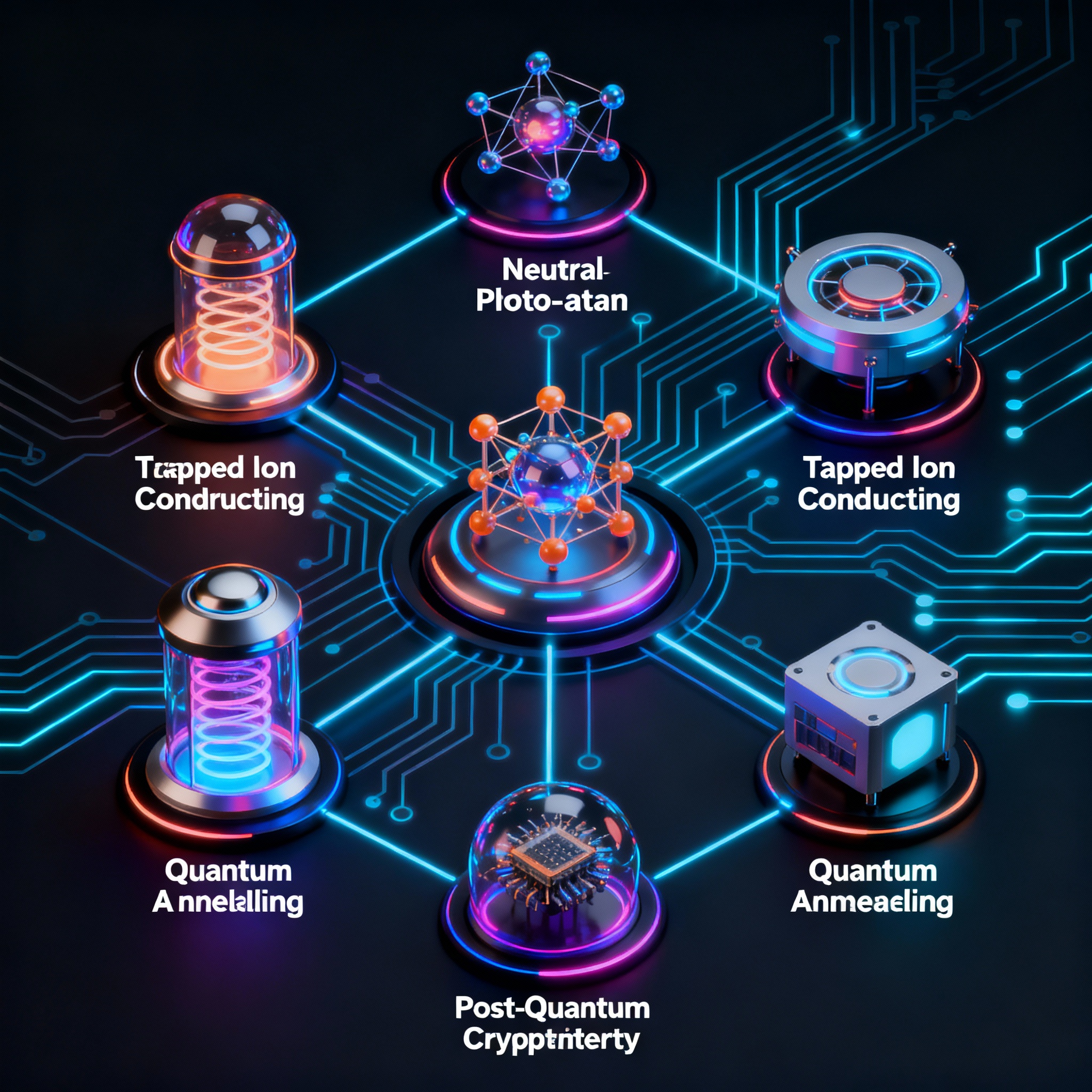
Investor interest in quantum stocks has surged as companies begin translating scientific breakthroughs into commercial products. Firms like Infleqtion and Xanadu exemplify this trend, leveraging public capital to accelerate development, broaden real-world applications, and pursue leadership in areas ranging from quantum sensing to next-generation processors.
This year is also notable for the diversity of quantum business models: while established players like IBM and Microsoft integrate quantum access into cloud platforms, newer pure plays focus on breakthrough hardware and scalable architectures. The capital influx from IPOs aims to position these companies for leadership in areas like AI acceleration, national security, photonic computing, and advanced cryptography.
Major Milestones by Quantum Companies in 2025
Several quantum firms have gone public or announced plans this year, tapping broad investor enthusiasm fueled by technological advancements and growing real-world application potential. Highlights include:
- Neutral-Atom Quantum Systems: Infleqtion, derived from ColdQuanta, is the first neutral-atom based quantum company to pursue an IPO, signaling the rising commercial maturity of this platform for both computing and sensing. It has secured strategic partnerships with Nvidia and government agencies, setting benchmarks for operational revenue in quantum hardware.
- Photonic Quantum Computing: Xanadu from Canada made waves with its recent SPAC listing, becoming the first pure-play photonic quantum computing company publicly traded. Its development of room-temperature quantum computers and scalable networked systems highlights a pivot toward fault-tolerant universal quantum machines.
- Trapped-Ion and Hybrid Quantum Architectures: Companies like Quantinuum and IonQ have continued refining trapped-ion qubit technologies combined with classical integration, with significant public market valuations and technology rollout. IonQ’s acquisition of Oxford Ionics expanded its R&D. Quantinuum’s roadmap includes large-scale error-corrected quantum processors.
- Post-Quantum Security and Cryptography: Firms focusing on hardware and software solutions for quantum-resistant encryption, such as SEALSQ and companies developing post-quantum cryptography standards, are positioning themselves as essential players in the security infrastructure for the quantum era.
- Quantum Sensing and Measurement Technologies: Several companies developing quantum sensors—leveraging neutral atoms, superconductors, or photonics—are parallelly gaining traction, with applications in navigation, medical imaging, and environmental monitoring increasingly commercialized.
Summary Table of Quantum Companies
| Company | Country | Founded | IPO/Funding Date | Age at IPO | Valuation (B USD) | Technology |
|---|---|---|---|---|---|---|
| Infleqtion | USA | 2011 | Sept 2025 | 14 | 1.8 | Neutral-Atom |
| Xanadu | Canada | 2016 | Nov 2025 | 9 | 3.6 | Photonic |
| PsiQuantum | USA | 2016 | Sept 2025* | 9 | 7.0 | Photonic |
| Quantinuum | USA | 2021 | June 2021 | 0 | 4.0 | Trapped-Ion |
| IonQ | USA | 2015 | Oct 2021 | 6 | 1.5 | Trapped-Ion |
| Rigetti | USA | 2013 | March 2022 | 9 | 1.5 | Superconducting |
| D-Wave | Canada | 1999 | Aug 2022 | 23 | 1.6 | Quantum Annealing |
| Arqit | UK | 2017 | Sept 2021 | 4 | 1.0 | Post-Quantum Cryptography |
| SEALSQ | Switzerland | 2018 | June 2023 | 5 | 0.3 | Post-Quantum Cryptography |
| Atom Computing | USA | 2018 | 2024* | 6 | 0.3 | Neutral-Atom |
* Private funding round
Thematic Market Trends in 2025
Investor interest and capital inflows have surged, with SPAC transactions facilitating public market access. Strategic alliances with tech giants and government funding accelerate the transition from the experimental stage to practical quantum computing and sensing applications. Emphasis is placed on scalable fault-tolerant architectures and niche applications like quantum-safe cybersecurity and quantum-enhanced measurement technologies. We can highlight some major trends:
- Diverse quantum technologies simultaneously mature, providing multiple pathways to quantum advantage.
- Photonic companies lead valuations, signaling investor confidence in scalability.
- Established companies like D-Wave and Rigetti demonstrate significant longevity and maturation.
- Increased SPAC activity and funding rounds accelerate market entries.
- Government and corporate partnerships remain critical in sustaining R&D.
- Fault tolerance, error correction, and quantum-AI synergy will dominate technology development.
- Future IPOs, particularly from European firms like PASQAL, may broaden public market exposure.
This overview highlights 2025 as a defining year for quantum commercialization, bridging scientific innovation with financial markets through diverse technology platforms that together shape the future of computing.
Outlook for the Next Months and Beyond
The ongoing quantum IPO wave is expected to continue, with anticipated listings from PsiQuantum and Horizon Quantum, further expanding market options for investors. The focus on fault-tolerant universal quantum computing, quantum networking, and quantum-enhanced AI applications will dominate R&D pipelines, likely driving breakthroughs and spurring partnerships with traditional tech giants.
Quantum companies with sustainable cash runway, credible performance milestones (e.g., error correction, qubit scaling), and growing commercial traction will attract more capital, fostering more stable valuations amid the current volatility of speculative pure plays. Governments and industries adopting quantum technologies for cybersecurity, drug discovery, and advanced materials will be key demand drivers.
This year has thus crystallized several quantum sectors poised to underpin the next technology revolution, reflecting both technology diversity and the transition from experimental to applied quantum science.